
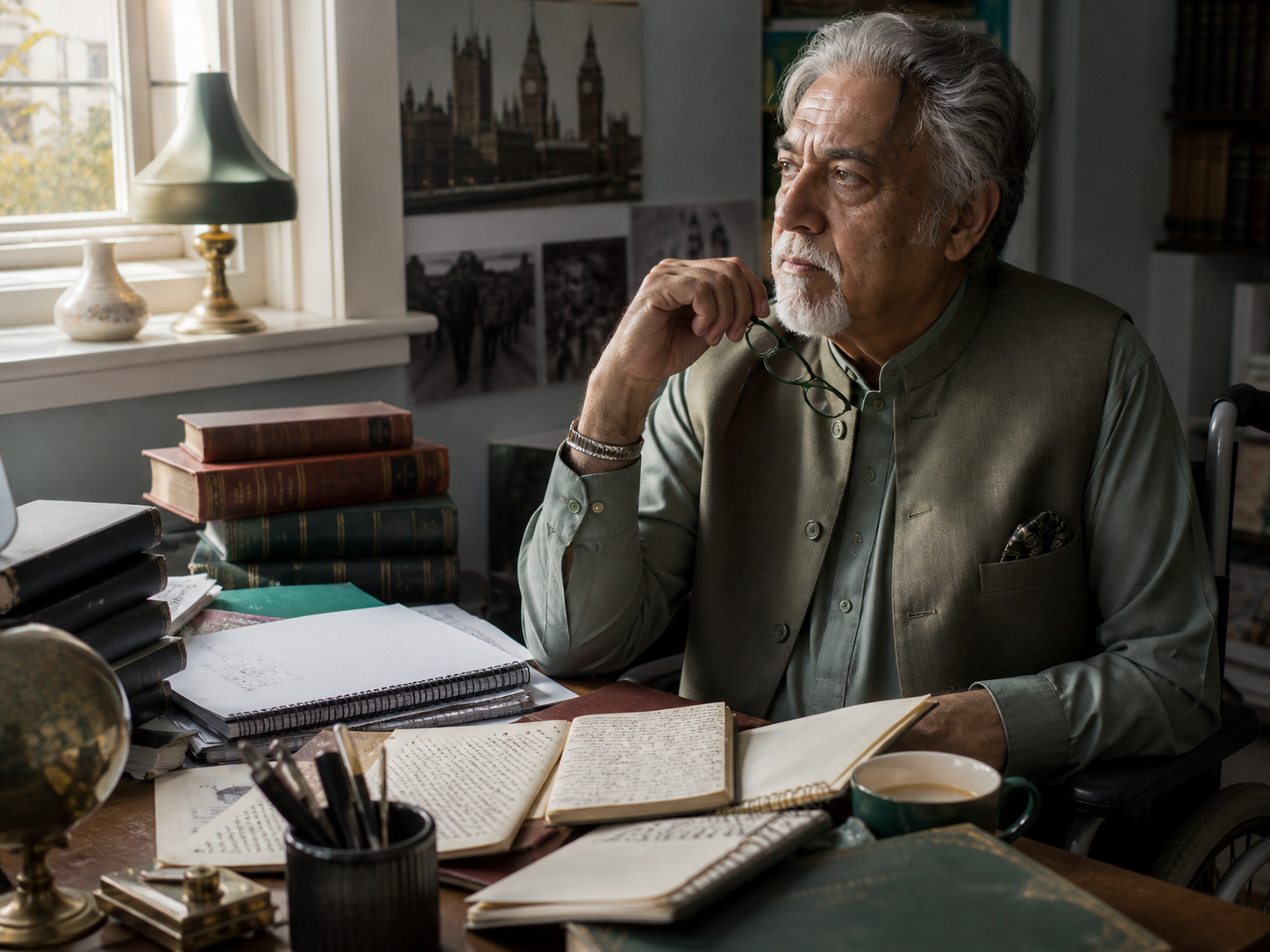
THE MAN BEHIND THE Pledge
A.D.D. did not begin in an office. It did not begin around the conference table. It did not begin with funding, staff, a business plan or a carefully commissioned piece of research. It began much less comfortably. It began inside a misunderstood and mistreated life. A life that had stood on strangely opposite sides of the same doors. A life that had spoken for others and later struggled to be heard itself. A life that had questioned systems and later found itself trapped inside them. A life that had helped and eventually learned the hardest and longest way to ask for help. Perhaps that is why A.D.D. could not have begun with a theory. It had to begin with experience.
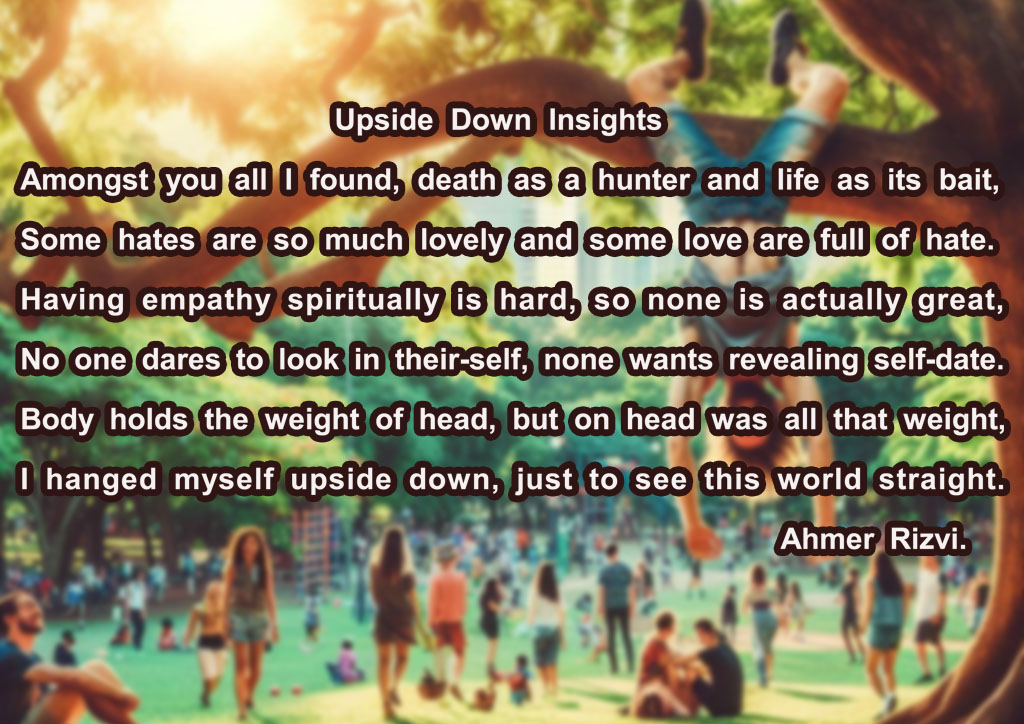
UPSIDE DOWN INSIGHTS:
There are some things we understand by looking at life from outside. And there are others we understand only after life turns us upside down. I have experienced both. I have known what it is to sit beside the insincere professional, and what it is to be a dedicated professional. To speak, and struggle to be heard. To advocate, and to become an applicant and in need of advocacy. To help, and to need available but not allowed help. To appear strong, and to discover how fragile strength can become when too many burdens arrive together. Those opposite positions gave me what I call: Upside Down Insights. Sometimes we understand the other side of the desk only when life moves our chair.
FROM ADVOCATE (Higy Court) TO MIGRANT APPLICANT:
Before coming to Britain, I practiced law in Pakistan as an Advocate of the High Court. Law taught me to look for legislation/enactments, the application thereof and evidence; To listen to different accounts. To distinguish allegations from proof; To understand the procedure; To recognise that rights without a route to enforce and exercise them can become little more than beautifully printed promises in conferences, commissions and welfare projects. As an advocate, people brought their difficulties to me. They were clients. Applicants. Defendants. Appellants. People are waiting for somebody professional to understand what had happened to them and what remedy is possible. Years later, in Britain, I experienced something very different. I became a client. The applicant. The person explaining and paying just for filling in the forms that could bring temporary relief at a high cost while working under wages. The person waiting. The person trying to make another professional understand why something mattered. And that change of chair taught me something law books could never fully teach. A case may be paperwork for the person handling it. To the person living it, it may be life itself. The file closes at five. The worry does not.

FROM JOURNALIST TO THE PERSON BEHIND THE STORY:
Journalism gave me another education. A journal is called “ Saheefah” in Arabicand Urdu. In ancient times journal/Saheefa were only Heavenly notes or entries. Absolutely true and wise. We have developed it into journalism. I worked as a deputy editor (when the second worst Martial Law 1977-1988 had controlled all the media) columnist, and reporter, including reporting around the Supreme Court and political and public affairs in Islamabad. Journalism teaches you to move curtains, and you find there that cannot be safely shared with public. Behind official statements. Behind the political language and changes. Behind bureaucracy, corruption and discrimination. Behind the polished version normally misguiding or incomplete and “expedient” truth. Breaking stories were published by name. Still over 200 selected columns are in archives of home office. Which were disbelieved then but if you look at situation especially in last 2 decades in Pakistan, my expression of apprehensions about that country’s future were over 80% true.
Anyway, in journalism, you begin learning that what is said, what is recorded, what is selected, and what is eventually presented to the public are not always identical and whole things. Later, through wrote articles in UK wide circulated Urdu newspapers, radio and television work in Britain, I saw another side of communication. A television program has limited time and permission to express myself. News must be selected. Edited. Ordered. Framed. A large reality must somehow fit inside a small screen. That is unavoidable. But it also taught me to ask: What happened outside the frame? Who was not interviewed? Which sentence was shortened? Which context disappeared? Whose experience did not fit comfortably into the available minutes? And eventually life turned that question back towards me. What happens when you are the person outside the frame?

FROM A PUBLIC VOICE TO A SILENT SEEKER:
There is a strange and depressing experience in having been heard publicly and still unheard privately. I have written. Spoken. Reported. Performed. Professed. Challenged. Appeared through prime and electronic media. Participated in public discussions. And yet there have been times when, as an individual seeking help, I have struggled to make systems understand something that felt perfectly clear from where I was standing. That contradiction matters to A.D.D. Because somebody with professional experience, education, communication skills and familiarity with institutions can sometimes become exhausted trying to explain an easily solvable problem. What happens to a person who has none of those advantages? What happens to somebody whose English is limited? Who has dyslexia? Who is frightened? Who knows that racism against specific immigrant community cannot be dealt with by ordinary people. Who has never written a formal letter? Who does not understand the terminology? Who is digitally excluded? Who is ill? Who is grieving? Who has been refused so many times that they no longer believe another explanation will make any difference? That question stayed with me. Who hears silent equality or justice seeker?
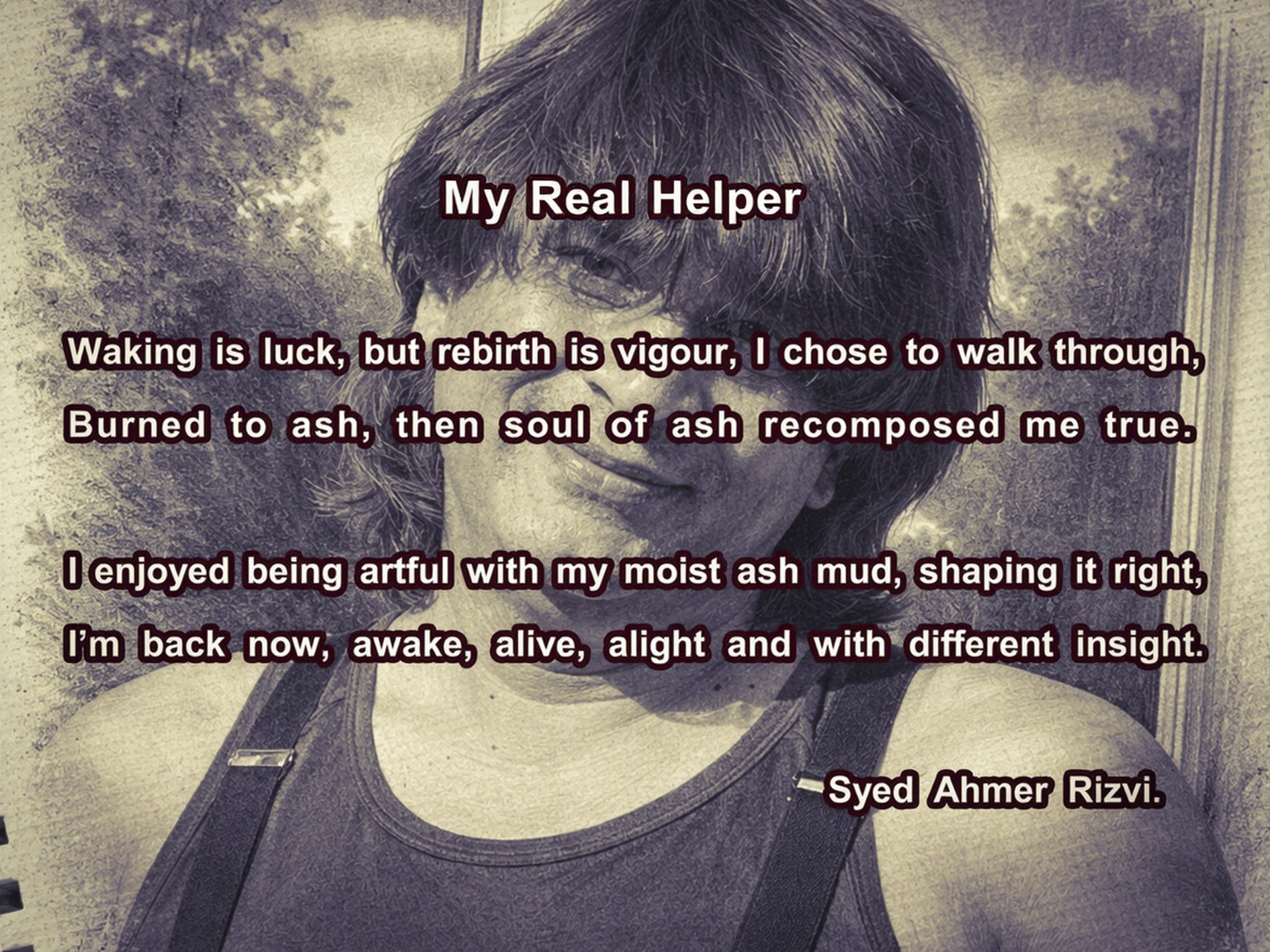
THE MIGRANT WHO HAD TO BEGIN AGAIN:
Coming to Britain meant another reversal. Qualifications, assets, property or goodwill do not automatically travel with the person migrating. Professional identity, creativity, services or trust do not always survive migration intact. The person who once knew exactly where they stood can suddenly become somebody learning a new country from the pavement upwards. I worked. Different jobs. Different places. Different circumstances. London. Wales. Manchester. Underrate wages everywhere. I knew what it was to work extraordinarily long hours because providing a roof, food, clothing and security for my family mattered deeply to me. For 13 years, I remained largely outside the benefits system. When my children reached the stage at which nursery administration required information connected with Child Benefit, I discovered another world of forms, entitlements and systems that I had barely used. But migration had already taught its deeper lesson. A migrant can carry an entire previous life inside them, education, profession, status, knowledge, art, relationships, Confidence, while the new society initially sees very little of it but with great suspicion. Human beings do not become empty merely because nobody in the new place knows what they once carried. That insight never left me.
WHAT ORDINARY WORK TAUGHT ME:
Professional titles taught me things. So did ordinary work. Perhaps some lessons became clearer there. I saw how vulnerable workers can be. I saw how employers defer even underrate remuneration with a confident belief that the worker would never risk losing this job as he must pay his tuition fee to an education trading private institution. I have seen how an under-wage worker deals with his landlord on unnecessary rent increment, without repairing what need to be done. How people unfamiliar with employment rights, local and laws may accept conditions they would challenge if they knew where to go and how to. But again, a migrant insufficiently surviving £2 an hour cannot think of engaging a solicitor. How migrants can become or are isolated. How underpayment, insecurity, and fear of losing work can silence people. How applicants arrange ILR or Nationality fees while already drowned in cost of living. How somebody can appear perfectly functional while privately having chest congestion for one missed payment away from the eruption of another crisis. You do not learn all of society from courtrooms, universities or television studios. Sometimes society reveals itself behind a shop counter. On a construction site. In a takeaway. In a property office, in job center, in a rented room. With a well-acquainted landlord, once a fan, then asking to increase rent unreasonably. During the night shift. In silence after somebody realizes they have very little bargaining position or power. Those experiences belong deep inside A.D.D. too.
POETRY TAUGHT ME TO HEAR WHAT PROSE MISSES -- PEOPLE CANNOT TEACH
Law seeks precision. It has its own precise way of conduct. Journalism seeks well-expressed articulate communication. But human pain does not always arrive or sit comfortably in either language. Though writers, poets, philosophers, and phycologists have been trying to express it comprehensively, it has never satisfied every sufferer which is good in a sense that arts, especially poetry and story writing and music composition are eternally alive. Sometimes a person cannot explain themselves chronologically. Then, no matter how you showcase your pain or present the problem, nothing can be conveyed if the hearer has no intention of understanding. Sometimes the deepest truth appears as an image. A metaphor. A broken sentence. A short silence in front of an impatient listener. I have never exercised poetry on a clocked schedule, it just comes from nowhere, but Poetry taught me not merely to write my own feelings, but to listen from the silence what may exist underneath somebody else's face and words. It allows me to say in a few words what my broken sentence left incomplete. A person may say, “I'm tired.” And mean much more than sleeplessness due to stress. They may say, “Forget it.” when what they desperately want is for somebody not to forget. They may laugh while describing something painful. They may speak angrily because fear has run out of gentle vocabulary. In the deepest self, from disappointment, disheartedness and helplessness among high humans can easily make the sufferer arrogantly rude. Poetry taught me that human expression cannot always be read literally and understood just from the surface. Sometimes we must listen to the pregnancy pauses between the sentence.
AND MUSIC ALWAYS GAVE ME THE STRENGTH, REVIVAL, SUPPORT THAT DOCTORS, PSYCHOLOGISTS AND ORGANISATONS COULD NOT. IT TAUGHT ME WHAT COMMUNITIES AND THEIR WORDS CANNOT.
There are moments when words themselves become tired, worn-out, and Noise. Music, melodies, rhythms, tunes, and instruments have remained another language in another world in my life. Flute. That I never learnt but just spontaneously played and played well. That is what listeners say. “It is very calming”. Piano and keyboard. I found same as Indian harmonium. Harmonium. Its masters can speak the words through it. Voice. That is supposed to present the whole internal truth. Melody. That keeps souls alive, so humanity. Performance. Sometimes music entertained. Sometimes it connected. I found it the quickest way to connect to the ultimate and almighty creator. Mostly it expressed what ordinary conversation could not. Sometimes it encouraged me to give and forgive whatever and whoever I can. It helped me to soar higher than my pain. And sometimes it simply kept something alive inside me that supported me to stay myself. Art taught me another principle that eventually became important to A.D.D.:
The creator is a human being before becoming a source of creation. We admire the performance. But what condition is the performer in? We admire the poem. But what happened before it was written? We ask an artist to create. But have we left enough inner space in which creation can occur? A creative mind is not a machine operating twenty-four hours a day. An idea may arrive like a bird. It lands briefly. The artist needs quietness to notice it before it flies. I will tell another time how hard it is to keep an inner artist alive while living with an anti-social, racist and exploiter neighbors. When Anti-social behavior teams, community safety teams and police stand by such ASB neighbors. When the mind is continually occupied by fear, injustice, conflict, humiliation, financial pressure or unresolved pain, the creation may stay still inside.
I believe forced creation is like still birth. The path towards creation can become blocked. I learned that personally.
NOTHING ABOUT US WITHOUT US:
My experience with the Manchester Poverty Truth Commission MPTC added another layer. Its principle, “Nothing About Us Without Us”, was powerful. And much of the work around it was sincere and valuable. I met people who wanted to make a difference. I saw efforts to bring lived experience into places where decisions are made. I contributed my own experience. I also contributed creatively, including through music. Yet I came away with a difficult personal insight. Even inside a process built around lived experience, it is possible for the need of one participant to remain insufficiently understood. People may be trying to help. A system may have good intentions. A slogan may be catchy. And still the person may feel that something essential about them happened, without real them. That experience changed the slogan inside me. From:
Nothing About Us Without Us to something intensely personal: Nothing About Me Without Me. Not because the collective principle is wrong. But because every of us is made of individual human beings. If the individual disappears inside the collective, the slogan can lose the very person it was designed to protect.
WHEN THE BURDEN BECOMES TOO HEAVY FOR ART:
Such as:
“Imagination now weighs heavy on the heart, I have dissolved into pure grief’s embrace, And withdrawn within an introverted part.”
(Rizvi)
During one particularly difficult period, I was carrying the unresolved distress surrounding an incident involving my son at school and my concerns about how the matter had subsequently been handled. Whatever others may have understood differently about those events, the effect upon me was profound. As a father, I carried the feeling that I had brought a child into the world, taught him to respect law, fairness and humanity, and then struggled and failed to give him the reassurance that the system would respond in the way I believed justice required. I fell to zero from hero in his eyes. At the same time, opportunities existed around my creative work. But I could not simply switch off that burden and perform as though the mind was a stage light controlled by a button. I believed that stage and lights and audience would be useless if my only son got his reasons to believe that his dad had been teaching him outdated ways to respect law and believe in systems and justice. I was watching a born writer, poet, comedia, and bright student disliking the system and loosing belief in the word “justice”.
This was a planned attack, covered by the school deputy head teacher to receptionists and governors. Within five minutes of attack CCTV footage was checked, the attacker was identified and I was phoned to take my son to hospital as he was in concussion. On phone I promised to summon the parents of attacker and expel him from school. But unfortunately, after 2 days when I contacted the school, I was told that CCTV footage gets blurred for 3 seconds and attacker could not be identified. I knocked the doors of all authorities, but the victim was son of an immigrant, and he was not that privileged to get justice. So, an artist, an analyst, a poet, a disabled volunteer was left unconfident to face his intelligent artist and most well-mannered son. On the other hand, I was offered the best stage to perform whatever I liked. That taught me something I now believe deeply:
Do not ask only why the artist has stopped creating. Ask what occupied the space where creation used to happen. Why did he not avail the light. This is not only about artists. A student cannot always study while mentally overwhelmed. A worker cannot always perform normally through a crisis. A disabled person cannot always reproduce yesterday's ability today. A grieving person cannot always satisfy a timetable. Sometimes the missing performance is not laziness. Sometimes, the human being underneath it is carrying beyond others ever thought to imagine.

THE EXPERIENCE OF (ABILITY IN) DISABILITY.
Then life taught me another side of dependence and independence. Disability changes the meaning of ordinary things. It becomes harder and scarier to share or offer residuals of remaining ability. Perhaps laws are legislated by them without them. So, first the condition “the disability” and then “the Support” cement the disabilities in the way the “the receiver” feel safer to be house bound and forget being active again at any level. So, A journey. A queue. A staircase. A noisy room. A form. A telephone call. A night's sleep. A day of concentration. A task that takes one person ten minutes may consume another person's available energy for the day. But perhaps one of the hardest aspects of disability is not the impairment itself. It is being repeatedly misunderstood and mishandled. Being assessed by what somebody sees for ten minutes. Being expected to explain the same limitations again. Being offered help designed around the system rather than around the person. Or being treated as though needing assistance in one area means having no ability in another. My own experience increasingly taught me: Do not measure the whole human being by the part that needs help. That became fundamental to A.D.D.
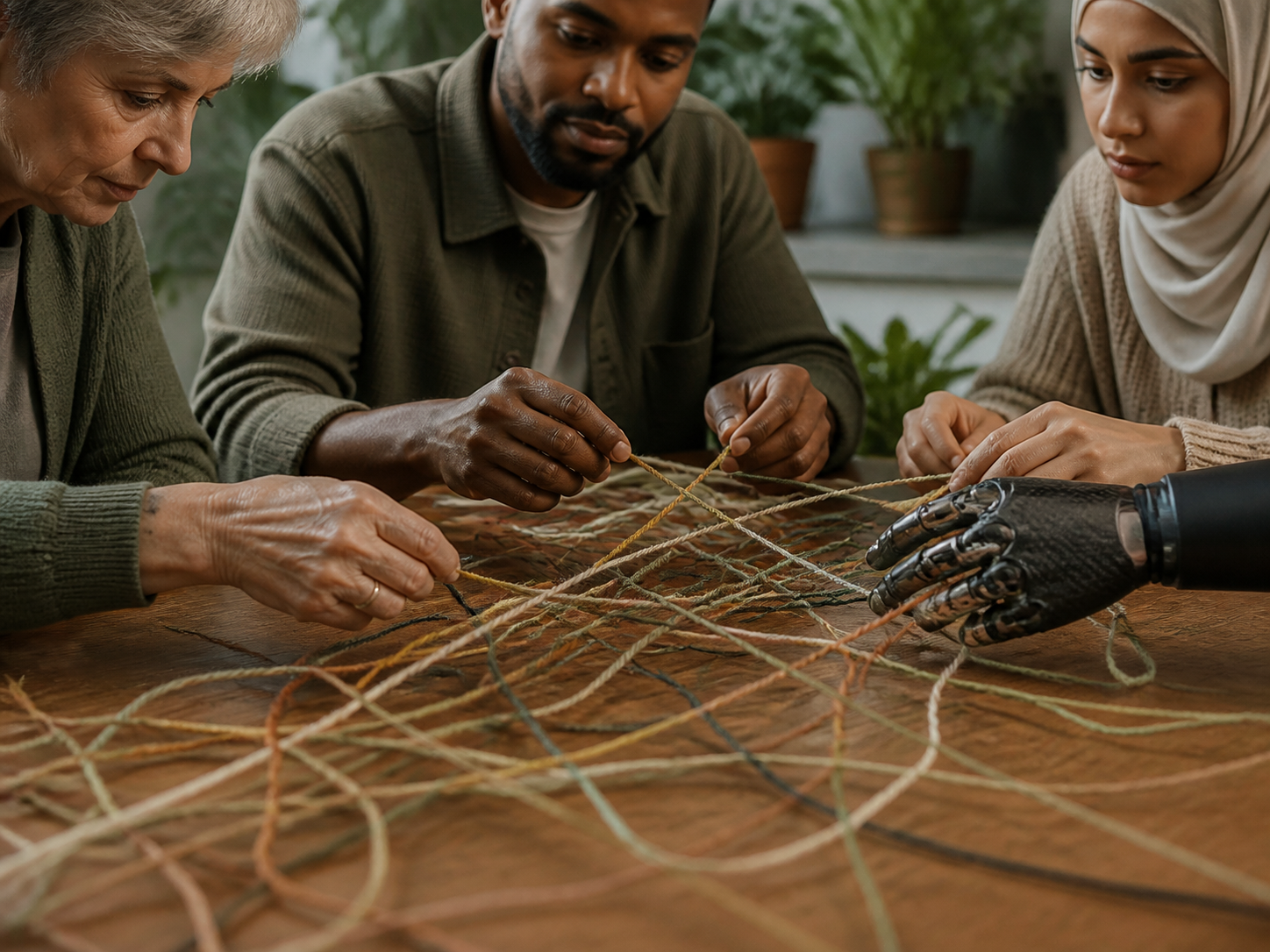
THE STUDENT ON THE OTHER SIDE OF EDUCATION.
Much later in life, I was approached by an Arden University Ltd. (Hardman street Manchester), previously piccadilly garden and St peter sq Manchester to formal education to obtain a certificate of Legal Proceedings/CLP and or digital visual production. CLP was to walk Pro Bono with those whose grievances were not healed through mandatory Reconsideration/ tribunals/ and appeal processes, and they were unable to afford the fee of a professional lawyer. I was graded as an equivalent to UK graduation by NAARIC. I was promised by the sales and admission teams that “SFE maintenance funds would not affect my council and DWP support as I was being taken in a blended course and not full-time studies. The student finance support team Arden will support me every step of the journey. I was convinced to get enrolled in undergraduate LLB with foundation in Sep. 2023 and I will be transferred to CLP or Digital production course through in year transfer process. Digital production could have set me free of financial worries, and creative ideas were in abundance.
I entered that experience with professional history, previous legal education and practice, voluntary work and a very clear idea of why I agreed to further legal study/CLP or digital productions. A most profound happiness to help get justice for those who were financially barred to engage a professional lawyer and to create, produce and present the ground realities of equality, inclusion and justice. My first wish was to produce a documentary on hard substance abusers/addicts, beggars and street sleepers discovering why did they chose a way that cut them off from everything and everyone while we all were around them as compassionate, civilized citizens of UK?
My experience with a private university then became another important chapter, continuing. I am dealing with the “student support staff, and administration”. From sales team to the vice chancellor and head of studies, all holding “incredible list of educational degrees, are concerned only about the tuition funding they get from government, and they have no concern with the education of students, especially migrant students. They advertise heaven in future by joining their (private commercial) university/college and are expert to turn a deaf ear, blind eye and incapable brain. They do it in daylight with maximum boldness as they know that neither a student will have time, knowledge and sources to complain about inconsistencies and irregularities and policy violations, nor any remedial departments would hear them.
I was lured to get enrolled in LLB, Sep 2023 intake and promised to be transferred to CLP or digital production before Feb 2024. No modules released because admission team was “working” on it. No maintenance fund was issued until Xmas 2023 as the staff did never confirm my course to SLC but university had their tuition fee immediately after enrolment.
I believe the course and route presented to me at recruitment were materially different from what I understood I was being encouraged to undertake, including my understanding around a shorter professional legal route and the much longer LLB program into which I was enrolled. I had already passed LLB (the law that was legislated/enacted by the British empire in the sub-continent. My degree was categorised as UK standard bachelor’s degree by NARIC.
But they enrolled me in an undergraduate program. Support that I was promised to provide during the journey did not, in my experience, materialize consistently as expected. My enrolment process was completed by Arden’s staff, and I did not attend induction session but I was inducted. Academic administration, disability-related needs, student finance and other systems began interacting with one another. The consequences did not remain inside the university. They entered ordinary life. Finance. Benefits. Housing costs. Health. NHS costs. Stress. Confidence. Time. Zest for life. I cannot still express the experience and after feelings of being of being on the most civilsed, lawful and humane land of the world, knocking at all the authoritative doors for justice and discovering that the doors were not real but mere paintings of doors on stone walls. Once again, I found the same lesson:
Institutions divide life into departments. Human beings live all the consequences together. This is not the place to resolve that dispute. Nor was A.D.D. created as a campaign against one university. The importance of experience is broader. It showed me how easily an educational opportunity can become an administrative trap when recruitment, expectations, support, disability and finance cease moving together. And it strengthened my determination that students, particularly disabled, mature, migrant or otherwise vulnerable students, should not be left alone merely because their difficulty sits between several departments. Winning a student visa for UK from abroad is not easy or free for students who come here hiding many dreams in their eyes to conquer the world in a justice, equality and support driven and most civilized country. But there is a strong case for producing a documentary on international students in the UK, one that sheds light on their daily struggles, working on under rate wages, more than 20 hours/week and misleading promises made to them prior to their arrival. Such private universities/colleges need to be dealt with immediately. A.D.D. is walking with 4 bright students but in miserable conditions. The same is happening with care workers from abroad.
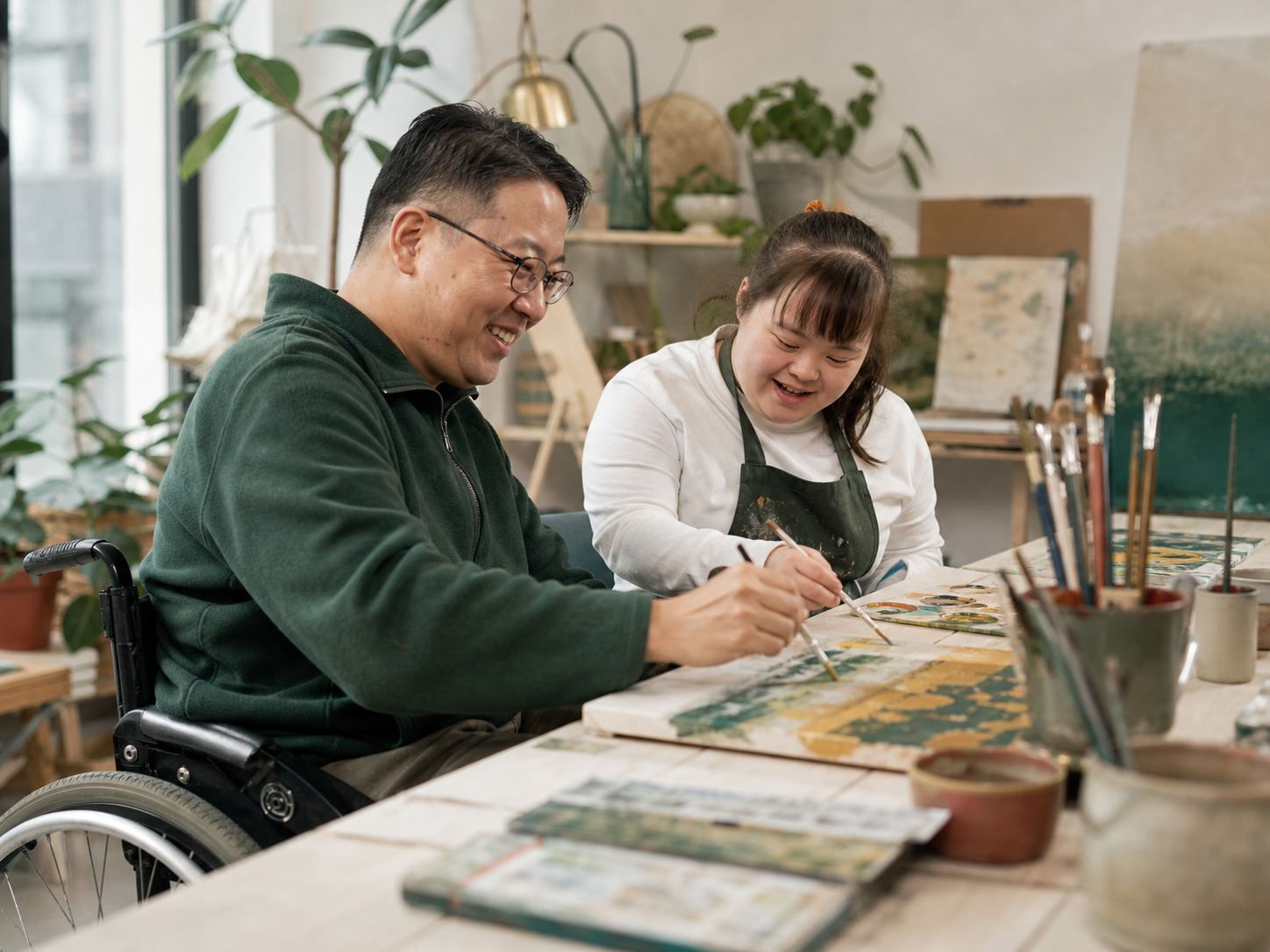
THE VOLUNTEER WHO EVENTUALLY NEEDED SOMEBODY TOO:
Throughout different periods of my life, volunteering remained important. Community work. Advice and liaison. Carers. Tenants. Poverty. Disability. People struggling with systems. People who simply needed somebody to write, telephone, accompany, explain or listen. Helping others can create a dangerous illusion that the helper will never need help. Life eventually and brutally corrects that illusion. I learned that somebody can be useful to others while struggling themselves. Strong in one area and fragile in another. A source of support today and desperately in need of understanding tomorrow. And perhaps this was one of the final pieces needed for A.D.D.: There are no permanent helpers and permanent helped. There are human beings. We change chairs.
A QUARTER OF A CENTURY OF LEARNING THE SAME LESSON of Life in UK, FROM DIFFERENT DIRECTIONS:
Law. Journalism. Migration. Ordinary work. TV hosting/ Analysis Family. Volunteering. Community involvement. Television. Music. Poetry. Disability. Education. Institutions. Isolation. Helping. Needing help. Again, apparently different experiences returned me to the same question: What happens to a human being when nobody sufficiently understands the whole person? And another: What becomes possible when somebody finally does? A.D.D. grew between those two questions.
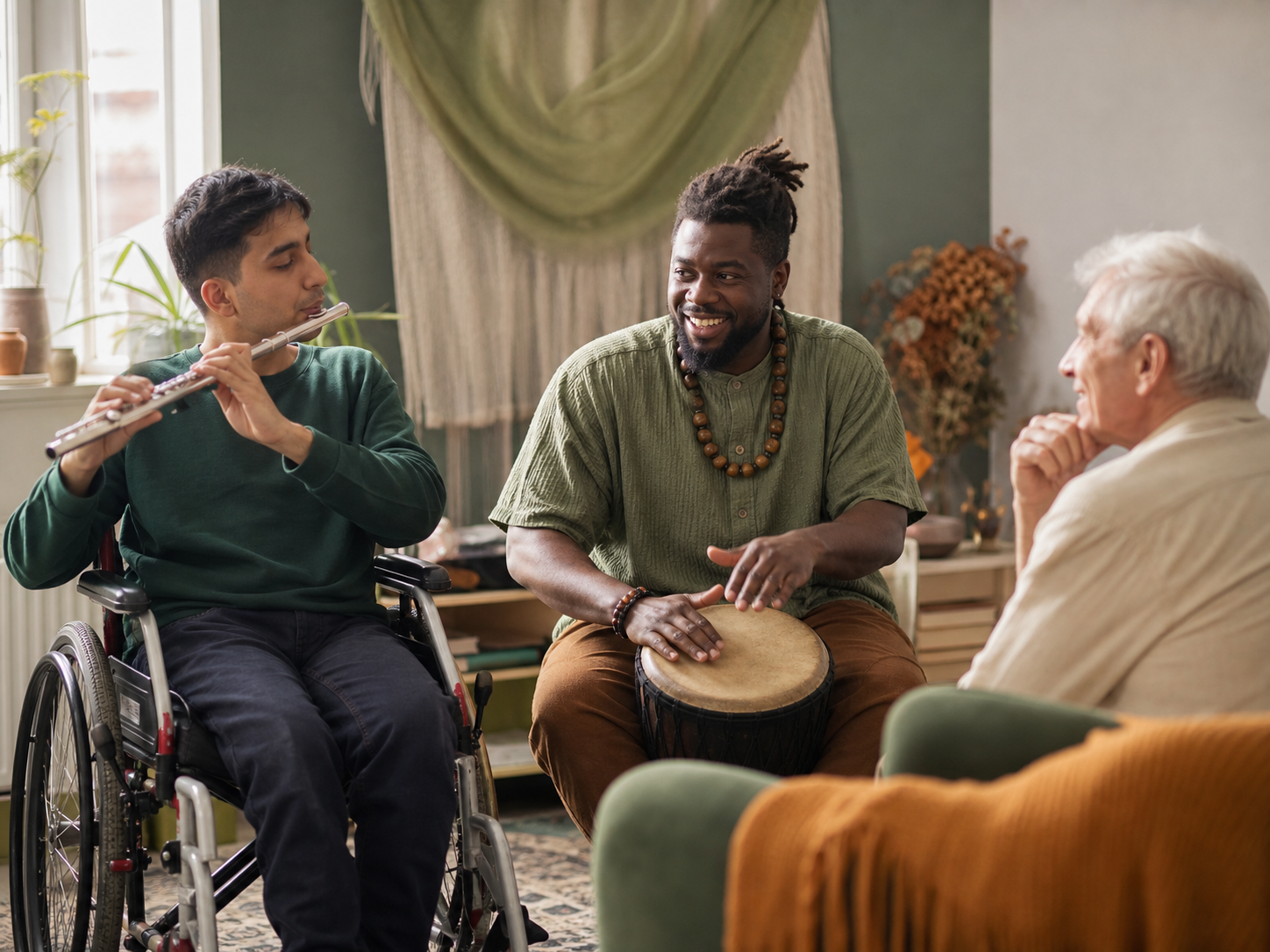
WHY “APPRECIATE”?
People can start to vanish behind these problems. When they are constantly defined and known by their problems, Disabled. Poor. Migrant. Student. Carer. Unemployed. Lonely. Old. Vulnerable. Clients. Patients. Applicant. Case. Each word may have a legitimate administrative purpose. But none contains an entire person. To appreciate somebody means looking again. Not only at what they need. But at what they contain; Ability. Experience. Memory. Talent. Knowledge. Humor. Music. Skill. Love. Volunteering. Potential. Nobody has asked about it. Appreciation restores dimensions that labels flatten.
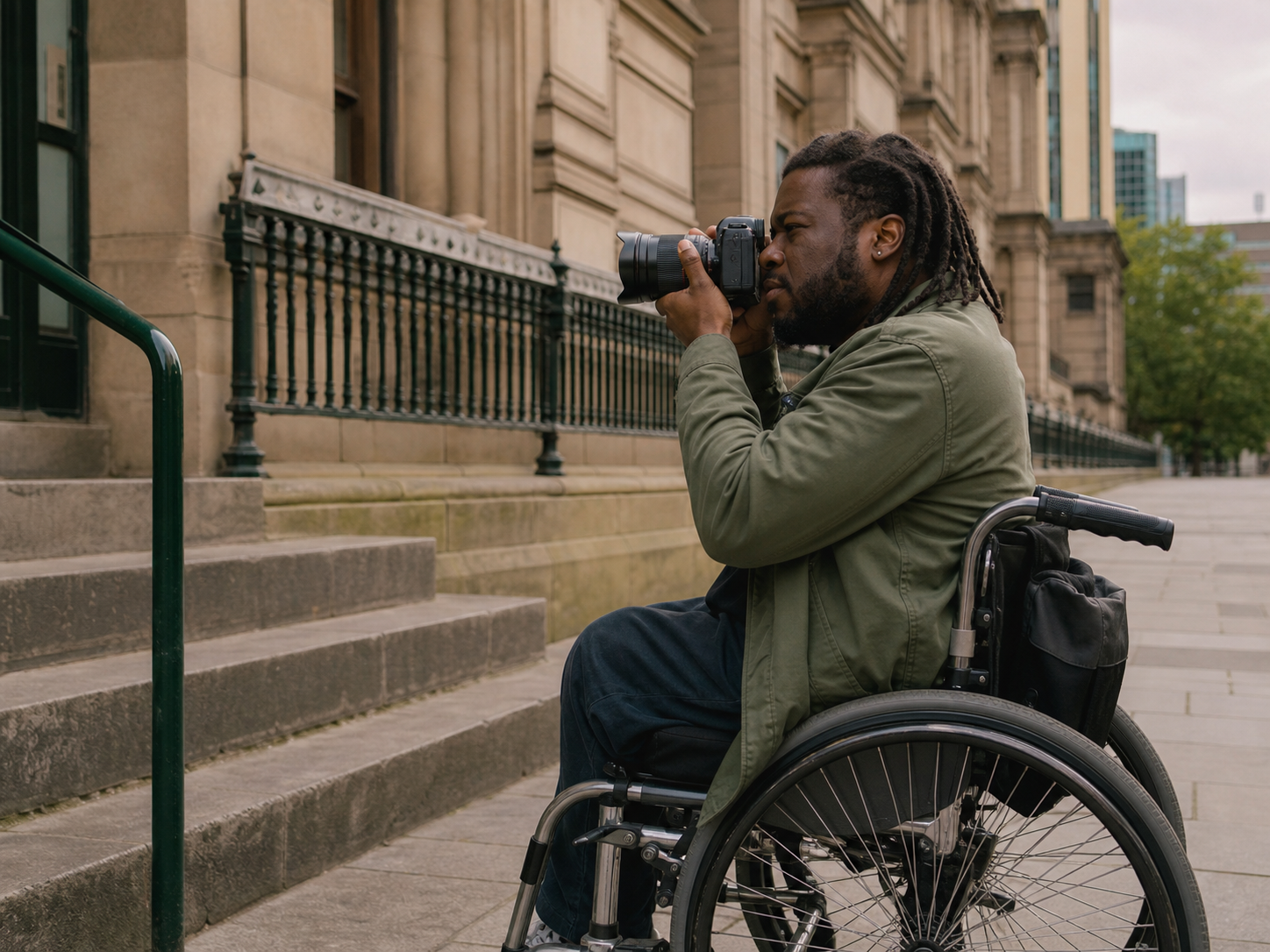
WHY “DISCRIMINATED”?
Because difficulty is not always produced by disability itself. Sometimes the human created environment produces it. The inaccessible building. The inflexible procedure. The assumption. The delay. The refusal to listen by some support staff member under influence of hard substances. The same solution imposed upon people with very different needs. The person may already have a disability. Discrimination adds another unbearable weight. And mostly that second weight is avoidable.
WHY “DISABLED”?
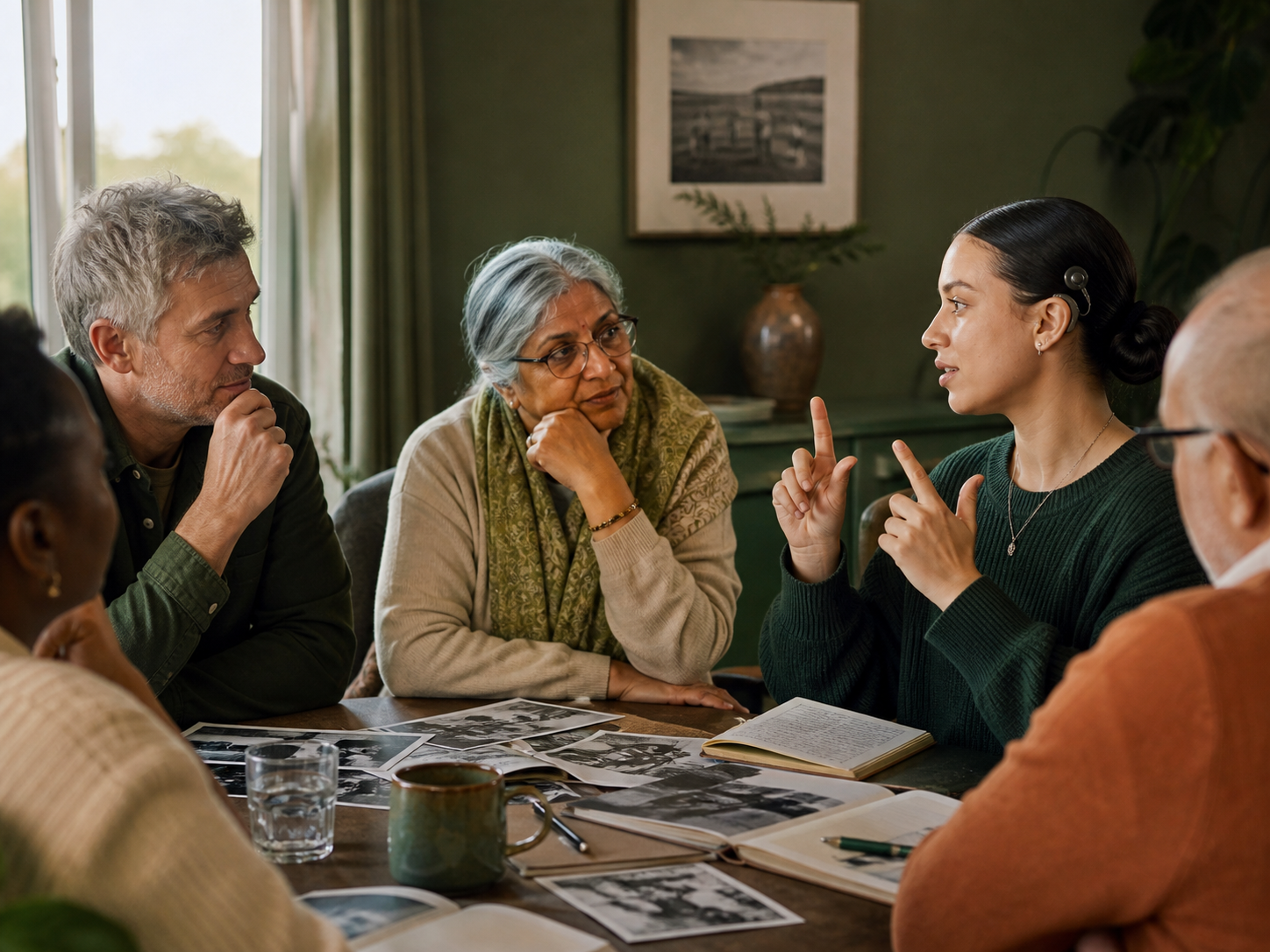
Because that is where A.D.D. began. With people whose abilities are too often hidden behind the assistance they require. With people expected systems that were not designed around them. With people whose independence can paradoxically be reduced by badly designed support. With people who may need more consideration in one area while possessing far more ability than others in another. Disabled First. Not disabled only. But disabled first. Because beginning with the person facing the greater barrier can teach us how to build something more humane for everybody.
AND SO A.D.D. BEGAN:
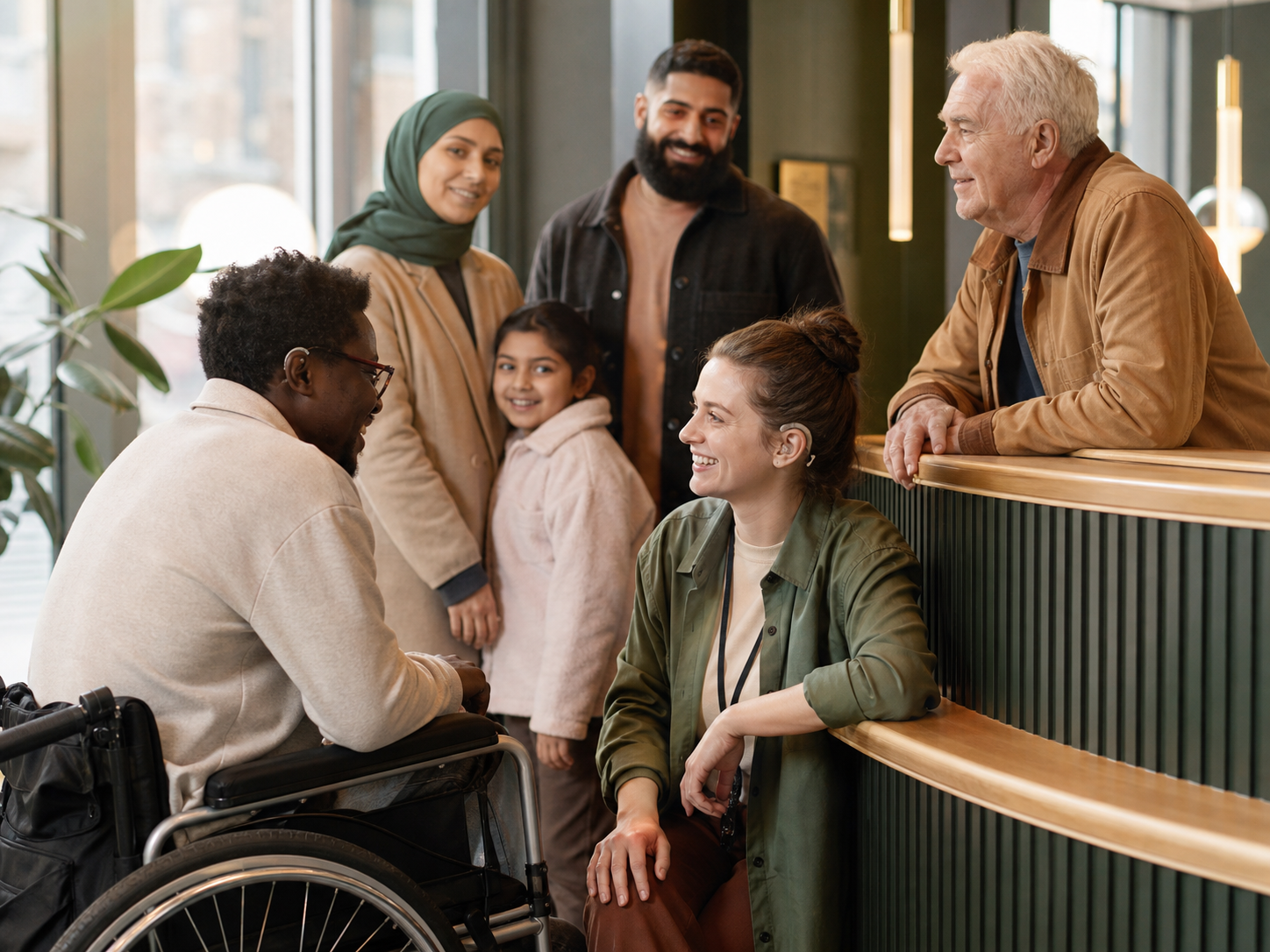
Not because I possess every answer. My life has taught me the opposite. Not because I have always succeeded. I have not. Not because every interpretation I have ever made must be correct. No human being should make that claim. A.D.D. began because experience repeatedly taught me that something can be done before perfection arrives. Listen. Write. Call. Explain. Connect. Accompany. Share. Notice. Appreciate. And where the problem belongs somewhere else, help the person reach that somewhere else without treating referral as disposal. Small things. But sometimes a small human act reaches precisely the place where a large system could not.

THIS STORY EXPLAINS THE BEGINNING NOT THE LIMIT:
A.D.D. may have begun through one person's experiences. It must never become imprisoned inside one person's experiences. My story is not everybody's story. My pain is not the measure of anybody else's pain. My conclusions should remain open to learning. And A.D.D. must eventually contain voices, abilities, experiences and insights far beyond mine. That is the purpose. Perhaps my life merely helped light the first lamp. The light does not belong to me. It belongs to the disabled person trying to be understood. The lonely person trying to be noticed. The volunteer wonders whether their small skill matters. The student trapped between systems and educational institutions that never existed with a proper educational policy. The migrant learning unfamiliar doors. The carer who has forgotten themselves. The artist whose song has gone quiet. The person who needs help. And the person who has some help to give. Sometimes they will be two people. Sometimes: They will be the same person.