

You Do Not Have to Know Which Problem Comes First
Sometimes there is one problem. A letter arrives. A form needs completing. A telephone call needs making. A bill needs understanding. There is a beginning. There is an issue. There may even be an obvious solution. But sometimes life does not behave so politely. One problem touches another. That one creates another. And before long, the person no longer knows where the original difficulty began. Health affects work. Work affects income. Income affects housing. Housing affects sleep. Lack of sleep affects concentration. Poor concentration affects abilities and appointments. A missed appointment affects benefits or worsening health Financial pressure affects mental wellbeing. Mental exhaustion affects relationships. Isolation makes every other problem heavier. And then another letter arrives.
Which problem should the person solve first?
Sometimes they genuinely do not know. A.D.D. helps understand that.
Just bring us the knot.

YOU DO NOT HAVE TO UNTANGLE IT BEFORE YOU COME.
People are often expected to organise their difficulties before asking for help. “What exactly is the issue?” “Which department does this concern?” “What outcome are you seeking?” Perfectly reasonable administrative questions.
But sometimes the honest answer is:
“I don't know anymore.”
That should not automatically disqualify somebody from being heard. Perhaps everything has been happening for too long. Perhaps there are five problems. Perhaps three organisations are involved. Perhaps one problem began years ago and another yesterday. Perhaps the paperwork is mixed together. Perhaps the person cannot remember which telephone call came before which letter. Perhaps they are exhausted. Perhaps the real first task is not solving anything. Perhaps it is simply:
Putting the pieces on the table.
One by one. Without embarrassment. Without demanding perfection. Then we look.

THE PROBLEM YOU SEE MAY NOT BE THE PROBLEM THEY ARE LIVING.
A person comes because their electricity bill is unpaid.
We could see:
Debt. But perhaps the person became ill. Could not work. Income reduced. They struggled with an online benefits process. A payment was delayed. Food became the priority. The electricity bill waited. Anxiety grew. Letters remained unopened. Now somebody sees an unpaid bill and asks, “Why didn't you deal with this earlier?” That question may be administratively understandable. Humanly, it may miss almost everything. The unpaid bill is visible.
The journey towards the unpaid bill is invisible.
A.D.D. wants to look at both.

THE LAST STRAW IS RARELY THE WHOLE LOAD.
We often hear, “It was the last straw.” That phrase contains an important truth. The final straw may be tiny. But it lands on something already carrying enormous weight. A missed telephone call.
A rude response. Another password failure. A delayed appointment. One more letter. One more person saying, “That's not our department.” From the outside, somebody may ask:
“Why are they so upset about such a small thing?” They may not be upset only about the small thing.
You saw the final straw.
You did not see everything underneath it. This is why understanding must come before judgement. And why a humane service asks not merely:
“What happened today?” but sometimes:
“What has been happening to you?”

LIFE DOES NOT RESPECT DEPARTMENTAL BOUNDARIES.
Government needs departments. Councils need teams. Universities need faculties and administrative divisions. Healthcare needs specialisms.
Organisations need structures. That is understandable. But human life refuses to cooperate with the filing system. The heart does not say:
“This anxiety belongs exclusively to Housing.” The stomach does not wait while Finance answers an email. Sleeplessness does not remain outside the university because the original problem began with Student Administration. A disabled body does not stop being disabled when the person enters an employment meeting. A parent's worry does not disappear just because they arrive at work.
Institutions separate responsibilities.
Human beings experience consequences. That distinction is one of the foundations of A.D.D.

WHEN EVERY OFFICE IS CORRECT — AND THE PERSON IS STILL LOST.
This is one of the strangest failures of modern systems. Organisation A says:
“That part belongs to Organisation B.” Organisation B says:
“We only deal with this particular aspect. It belongs to department C”. And department C say “it needs to be initialized by Department A”.
Department D explains correctly that another team controls the decision. Team D provides the correct website. And by providing only website they believe that the issue is solved, irrespective of applicant’s digital skills or familiarity. Everybody may be procedurally correct.
And still:
The human being remains standing in the middle.
Nobody necessarily intended to abandon them. Nobody necessarily broke a rule. Every arrow on the organizational chart may be pointing exactly where it should. Yet the person has been travelling between arrows rather than towards an answer. A.D.D. considerably notices that space. The space between services. Between departments. Between eligibility criteria. Between referrals. Between:
“Not us” and “Try them.”
Some people do not fall through a crack.
They become exhausted walking between perfectly organized cracks.
THE KNOT MAY CONTAIN DISABILITY
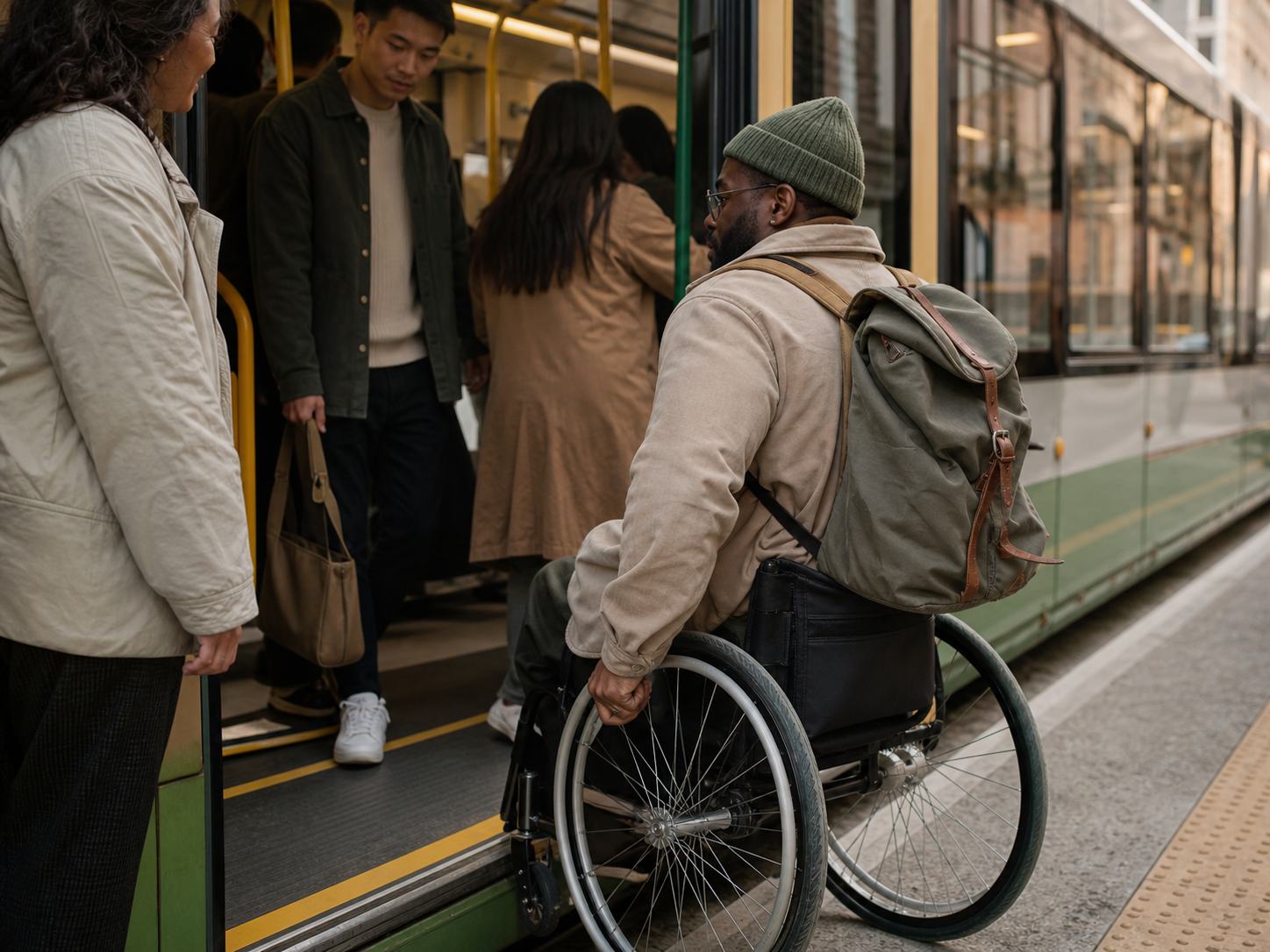
A disabled person can begin the day with less usable energy than somebody else.
Before addressing the actual problem, they may already have negotiated
Pain, medication, fatigue, mobility, breathlessness, sensory difficulty, concentration, personal care, transport, or disturbed sleep.
Brin fog, Depresssions, Anxiety, Or imagine just 10% impacts of all above mentioned. Then society hands them the same administrative workload and says:
“The deadline is Friday.” Technically equal. Practically very different. This is why Walk With Them matters here.
Equal worth. Different needs. Tailored support.
The knot should not be tightened by pretending everybody has identical hands with which to untie it.

THE KNOT MAY CONTAIN DIGITAL EXCLUSION.
A person may know exactly what they need. They simply cannot reach it. They just cannot create or demonstrate or reproduce it. The application is online. The evidence must be uploaded. The appointment is booked through a portal. The password has expired.
OTP is invalid.
You have entered too many wrong passwords. The verification code goes to an old telephone number. The old telephone number can only be changed after logging in. You changed the number long ago because of telemarketers and scammers. To log in, the person needs the verification code.
There are moments when modern administration accidentally begins writing comedy. Unfortunately, the person trapped inside it may not be laughing.
Technology should simplify access, not become the qualification required to deserve access.
Sometimes A.D.D.'s role may be nothing more complicated than helping somebody get through that digital doorway. That can be enough.

THE KNOT MAY CONTAIN EDUCATION
A student may appear to have an academic problem. But what if the academic difficulty is connected to a private university student support? Or incorrect expectations created by sales agent and admission team/interviewer at recruitment?
Or finance? Or interrupted support? Or health? Or inaccessible systems? Or access barred by a member of admin staff? Or contradictory information? Or several or all of these together and more? The student may be told, “This is an academic matter.” Another part may be described as administrative. Another financial. Another disability-related. Each description may contain truth. But:
The student lives one life.
The consequences meet in the same room. The same bank account.
The same body. The same night's sleep. The same future. This is why A.D.D. believes students should not automatically be treated as academic units moving through a commercial or administrative process.
Education should develop the human being, not lose the human being inside its machinery of planned or programmed exclusions.
THE KNOT MAY CONTAIN MIGRATION
Migration is the most brutally isolating helplessness. Migration can add many invisible layers. Even having lawfully equal rights on ILR, you may be dropped at first filter. A person may be highly educated and still unfamiliar with the British system. They may not understand which institution does what. They may fear authority because authority meant something very different where they came from. They may hesitate to complain. They may misunderstand correspondence. They may have no family nearby. They may be embarrassed to admit that something everybody around them appears to understand makes no sense to them. They may have spent years being independent and suddenly need help with ordinary administration.
Unfamiliarity is not inability.
The person has not become less intelligent. The map has changed. Sometimes they simply need somebody to explain or update the map they already have.
THE KNOT MAY CONTAIN WORK.
Employment difficulties rarely remain at work. Underpayment which is common, becomes rent difficulty. Uncertain hours become uncertain income. A hostile workplace becomes an epicenter of suffocation and sleeplessness. Lack of adjustment and delayed insincere responses worsens disability. Fear of dismissal creates silence.
An student and care worker immigrants have to tolerate a bunch of inhumane unfairness because they cannot afford the consequence of challenging it.
A society where challenging injustice becomes a dare devil act, does not stand strong for long.(Rizvi)
And somebody observing from safety may say:
“Why didn't you complain?”. Because sometimes exercising a right carries a price before it brings a remedy.
A right that somebody is too frightened or too vulnerable to exercise is a revoked right requiring a bridge. A society ignoring even a single individual keeps constantly parting from being civilized or respecting citizenship. (Rizvi)
Sometimes that bridge is information. Sometimes confidence. Sometimes representation. Sometimes specialist professional advice. Sometimes simply somebody standing beside the person while they begin.
THE KNOT MAY CONTAIN LONELINESS.
Loneliness is particularly dangerous because it can attach itself quietly to every other difficulty. A problem discussed with somebody can become smaller. The same problem carried alone can grow during the night. There is nobody to say: “Leave that letter until morning.”
Nobody to ask: “Did you eat?”
Nobody to say: “I think you're misunderstanding what they mean.”
Nobody to make tea while the person telephones. Nobody to interrupt the spiral.
Isolation promotes problems by providing an empty room in which they echo in silence and invisibly dance drastically.
Sometimes A.D.D. may not solve the underlying issue. But reducing isolation can change the person's ability to face it. That is not insignificant.
POVERTY MAKES SMALL MISTAKES EXPENSIVE.
Money creates margin. When there is enough, a mistake may be inconvenient. When there is almost none, the same mistake can become a crisis. A late fee. A missed bus. A broken appliance. A telephone running out of credit. A payment arriving two days late. An unexpected journey. Disconnected Broadband multiplies all problems times 10. For somebody with financial cushioning, these may be irritations. For somebody living close to the edge:
There may be no small financial emergency.
Poverty reduces the space in which human error is affordable. And then society sometimes punishes the person for failing to navigate perfectly while possessing the minimum room for error.
A.D.D. should understand that. Not excuse everything. Understand it. Because understanding changes the kind of help that becomes useful.
THE KNOT MAY CONTAIN SHAME.
This one is easily missed. People are ashamed of debt. Ashamed of needing benefits. Ashamed of loneliness. Ashamed of being unable to understand technology. Ashamed of disability. Ashamed of addiction. Ashamed of losing work. Ashamed of being deceived. Ashamed of having returned to education and struggled. Ashamed of having been bullied. Ashamed of racism in neighborhood. Ashamed of needing somebody after spending a lifetime helping everybody else. Ashamed of being mistreated by their doctor. Shame makes people hide information. Then incomplete information makes help less effective. Then the failure reinforces the shame. A knot inside a knot. A.D.D. should try to create another atmosphere:
Tell us what matters.
You do not have to perform or play dignity by pretending everything is fine. Dignity is not the absence of difficulty. Dignity is the recognition that difficulty does not remove human worth. Dignity is admission by society that problem creators have been identified and almost dealt with. (Rizvi)
SOMETIMES THE FIRST JOB IS TO STOP THE KNOT TIGHTENING.
Not every complicated situation can be solved immediately. Sometimes the first task is stabilization. What is urgent? What has a deadline? Is somebody unsafe? Is income about to stop? Is housing at immediate risk? Does professional medical, legal, safeguarding or emergency help need to be involved? What can wait? What document must not be lost? Which telephone call matters today? Which problem can safely remain until tomorrow? When everything feels urgent, the person may do nothing because the mind cannot choose. So sometimes the most humane sentence is:
“We don't have to solve everything today. Let us decide what must happen first.”
One thread. Then another.
WE DO NOT PROMISE TO UNTIE EVERY KNOT COMPLETELY
Some knots require expertise beyond A.D.D. Some need statutory intervention. Some require legal representation. Some involve long processes. Some cannot be completely resolved. And some circumstances may contain consequences that no organisation can reverse. We must be honest about that. A.D.D. should never manufacture hope merely to sound compassionate.
False hope is worst than abandonment.
But there is a difference between promising an outcome and refusing to leave somebody bewildered. Even where we cannot solve the problem, perhaps we can help establish, what has happened; what appears urgent; what documents exist; which service may be responsible, what question should be asked, and what the next reasonable step may be. Sometimes clarity itself loosens the knot.
WHEN WE NEED SOMEBODY ELSE, WE CONNECT, AND FOLLOW
This is where When Life Becomes a Knot's principle becomes practical. Suppose one part requires a solicitor. Another requires the council. Another requires a GP. Another requires a benefits specialist. A.D.D. should not pretend to become all four. But neither should the person necessarily be handed four telephone numbers and sent away carrying the same confusion. Where reasonably possible and with consent, we can help organize the routes. Which comes first? What information may each need? Can one outcome affect another? Has the person managed to make contact? Did they understand the response?
Referral is not rejection.
And when we put somebody through to the right door:
We can still remain interested in whether it opened.
THE PERSON MAY ALREADY KNOW THE ANSWER.
This is important. Sometimes a person does not need us to solve their problem. They need enough quietness to hear their own thinking again. Stress creates noise. Fear creates noise. Too many opinions create noise. Too many letters create noise. A calm conversation can occasionally do something remarkable. The person begins explaining. Stops. Thinks. And says:
“Actually, I think I know what I need to do.”. Wonderful.
Do not steal that moment from them.
The purpose of support is not to prove how necessary the supporter is. Sometimes the best thing we can do is help somebody rediscover the answer they were carrying underneath the noise.
UNTANGLING DOES NOT MEAN TAKING OVER.
Imagine a necklace chain badly tangled. If somebody snatches it impatiently and pulls hard, the knot tightens. Human problems can behave similarly. Do not rush merely because you are the helper. Do not decide that your preferred solution must be theirs. Do not contact everybody at once. Do not turn somebody's complicated life into your exciting project.
A human being is not a puzzle provided for our satisfaction.
Go carefully. Understand. Ask permission. Prioritise. Take one thread. Then another. And sometimes stop. Because the person whose life it is may need to breathe between them.
WHEN THE HEART IS TIRED.
And sometimes, after all the organising, there remains something no spreadsheet can untangle. The person is simply tired. Not lazy.
Not unwilling. Tired. The body has limits. So does the heart. There comes a point when another telephone call, another complaint, another appeal, another explanation may have to wait for an hour. Perhaps that hour needs music. Poetry. Painting. A walk. A garden. Prayer for somebody who prays. Silence for somebody who does not. A melody. A cup of coffee. A ridiculous joke. Something that reminds the person:
I am more than the problems currently surrounding me.
Rest is not always surrender. Sometimes rest is to repair and gather the courage to return. No engine can run without a break and overhaul. We are human and need more frequent rest than mechanical engines. So, you are a helper or in need of help, make sure you manage time for yourself and rest too.
YOU ARE NOT THE KNOT.
This may be the most important thing on this page. When difficulties multiply, they can consume identity. The person becomes:
The claimant. The patient. The debtor. The complainant. The disabled person. The unemployed person. The student in difficulty. The migrant. the case. But these are circumstances. They are not entire human beings.
Before the debt, there was a person. Before the diagnosis, there was a person. Before the complaint, there was a person. During all of them:
There is still a nice person.
A person with humors. History. Preferences. Relationships. Knowledge. Possibilities. Perhaps music. Perhaps poetry. Perhaps abilities that have had no room to breathe recently.
You may be carrying a knot.
You are not the knot. You are not the designer or manufacturer of the knot. Sometimes circumstances get out of control and create unwanted and disturbing situations. A.D.D. must remember the difference.
BRING US THE KNOT.
Do not wait until everything is neatly organized. Do not wait until you know the terminology. Do not wait until you have worked out which department is responsible. Do not wait until you can tell the story without emotion. Bring what you know. Bring the letter. Bring the dates you remember. Bring the questions. Bring confusion. Bring the part that makes no sense. And where the matter is within what A.D.D. can responsibly support:
We will begin with you.
Not necessarily by pulling every thread. Perhaps simply by finding the first one.
ONE THREAD AT A TIME.
A.D.D. cannot promise a life without knots. Nobody can. But perhaps human beings were never meant to untangle every one alone. One person holds the chain. Another finds the loose end. Another knows where specialist help exists. Another makes the call. Another provides the professional knowledge. Another brings tea. Another brings music. And slowly:
something that looked impossible begins to move. Not because one heroic person solved everything. But because several ordinary human beings refused to say: “Not my problem.”
That is community. That is responsibility becoming action. That is the philosophy of A.D.D. acquiring hands.